
Connecting the Dots: Building Integrated Crisis Systems for Rural Communities
Kristen M. Ellis, LMFT
Senior Director, Consulting Operations

A Rural Reality: When Crisis Hits Close to Home
Imagine living in a small rural town. You or a loved one are experiencing a mental health crisis. The nearest crisis center is 90 minutes away. You call 988, but wait times stretch long. Mobile teams exist, but are limited in coverage. Emergency rooms are often ill-equipped for behavioral health crises. You’re navigating a fragmented system with unclear procedures and limited support.
This is not a rare scenario. Many individuals in rural areas face systemic barriers that delay care, increase risk, and amplify trauma. These gaps highlight the urgent need for connected, integrated behavioral health crisis systems, especially for underserved and geographically isolated communities.
Fragmented Access and Workforce Challenges
Access gaps: Rural residents often travel long distances to reach crisis centers, with limited transportation options or mobile coverage.
Workforce shortages: Behavioral health clinicians and trained peers are scarce in rural areas, creating delays in response and unmet need.
System complexity: Fragmented communication across agencies (law enforcement, emergency services, crisis lines) creates duplication, confusion, and inconsistent care.
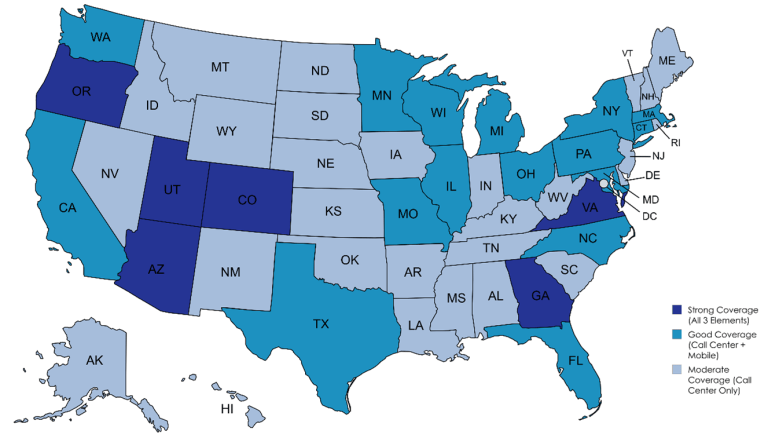
Data sources: SAMHSA, National Council for Mental Wellbeing, state behavioral health authorities (2024-2025)
How We Approach the Challenge
At Recovery Innovations Consulting & Training (RICT), we guide communities to redesign crisis systems with a holistic, sustainable, and evidence-informed approach. Our work focuses on four key areas:
Experience-informed system design: Mapping every entry point and workflow to identify gaps and redundancies.
Funding and sustainability planning: Aligning initiatives with state and federal regulations, grant opportunities, and reimbursement models.
Workforce integration: Strategically combining peer and clinical roles to create balanced, effective crisis teams.
Operational and technology optimization: Developing policies, procedures, staffing models, and communication protocols to ensure consistent, reliable care.
Evidence That Integration Works
Our consulting work across island, rural, and urban systems shows that when planning, operations, and data are connected, communities see real improvements in access, coordination, and sustainability.
Tulare County, California
Conducted a gap analysis of existing services and capacity.
Developed an implementation plan aligned with DHCS standards.
Supported the launch of Mobile Crisis and Mobile Response and Stabilization Services (MRSS), defining workflows, staffing models, and coordination pathways with law enforcement and 988.
Continue to provide technical assistance as the county scales operations and advances toward sustainability.
Detroit Wayne Integrated Health Network (DWIHN)
Conducted a comprehensive gap analysis and implementation plan.
Developed job descriptions, policies, and procedures to clarify staff roles and responsibilities.
Translated findings into actionable steps with priorities, timelines, and resource requirements to guide ongoing system transformation.
Hawaii Department of Health
Conducted a statewide gap analysis across all islands to assess both substance use disorder (SUD) and crisis service capacity, identifying geographic disparities, workforce gaps, and system bottlenecks.
Developed a comprehensive implementation and sustainability framework, including staffing models, workforce development timelines, and financial projections for long-term system reliability.
Created a sustainability plan with clear financial, operational, and performance strategies to support statewide expansion.
These examples demonstrate how coordinated planning and evidence-based interventions can improve outcomes, increase engagement, and reduce reliance on emergency departments or law enforcement as the first point of contact.
A Practical Guide: Steps for Communities
Conduct a System Assessment: Map all existing crisis services and identify gaps. Engage stakeholders from healthcare, law enforcement, schools, and community organizations to gain a qualitative and quantitative understanding of current resources.
Develop a Strategic Plan: Create a roadmap with clear goals, timelines, and responsibilities. Ensure it addresses gaps, leverages existing assets, and outlines priorities for workforce, technology, and funding.
Implement Training Programs: Train clinical and peer staff on crisis intervention, de-escalation, and trauma-informed care. Ongoing education ensures responsive, skilled teams.
Align with Regulations and Funding Frameworks: Review state and federal behavioral health standards, Medicaid guidance, and licensure requirements (e.g., SAMHSA’s National Guidelines for Behavioral Health Crisis Care and CMS’s 988 planning guidance). Compliance ensures operational stability, reimbursement, and sustainability.
Establish Communication Protocols: Standardize coordination between agencies. Include real-time information sharing, escalation pathways, and clear points of accountability.
Monitor and Evaluate: Use measurable indicators—response times, client outcomes, satisfaction metrics—to continuously improve performance.
Secure Sustainable Funding: Explore diverse funding sources, including federal, state, and local grants. Communities can also access specialized resources such as Rural State Behavioral Health Grant Programs to fund mobile teams, peer training, and infrastructure improvements.
Peer Support Integration Matters
Peer support improves engagement, retention, and outcomes in behavioral health settings (SAMHSA, 2022; Repper & Carter, 2011; Davidson et al., 2006). By embedding individuals with lived experience into crisis teams, communities foster trust, reduce stigma, and enhance person-centered care.
Peer support specialists act as first responders, navigators, and advocates, often bridging gaps between clinical services and the lived realities of clients.
Integration of peer and clinical teams enhances collaboration, decision-making, and trauma-informed practices across the system.
Take Action: Steps for Community Leaders
Community leaders can catalyze meaningful change by:
Advocating for Policy Reform: Partner with policymakers to advance legislation supporting integrated and sustainable crisis systems.
Fostering Collaboration: Promote coordination across healthcare, law enforcement, community agencies, and peer networks.
Engaging the Community: Include individuals with lived experience and family members in planning and evaluation to ensure services meet local needs.
Promoting Education and Awareness: Launch campaigns to increase visibility of crisis resources and reduce stigma.
Securing Resources: Pursue funding opportunities, including federal, state, and rural grant programs, to sustain services.
Related Resources
Sozosei Parity Action Plan (2024)
McKinsey: Global Behavioral Health Crisis Principles (2025)
National Council Roadmap to the Ideal Crisis System (2021)
About the Author
Kristen M. Ellis is a licensed marriage and family therapist and Senior Director, Consulting Operations with Recovery Innovations. She partners with states, health systems, and communities to strengthen crisis, behavioral health, and peer support services. She has led large-scale crisis system redesigns, authored county and statewide implementation plans, contributed to national and international behavioral health resources.
Ready to Move from Planning to Action?